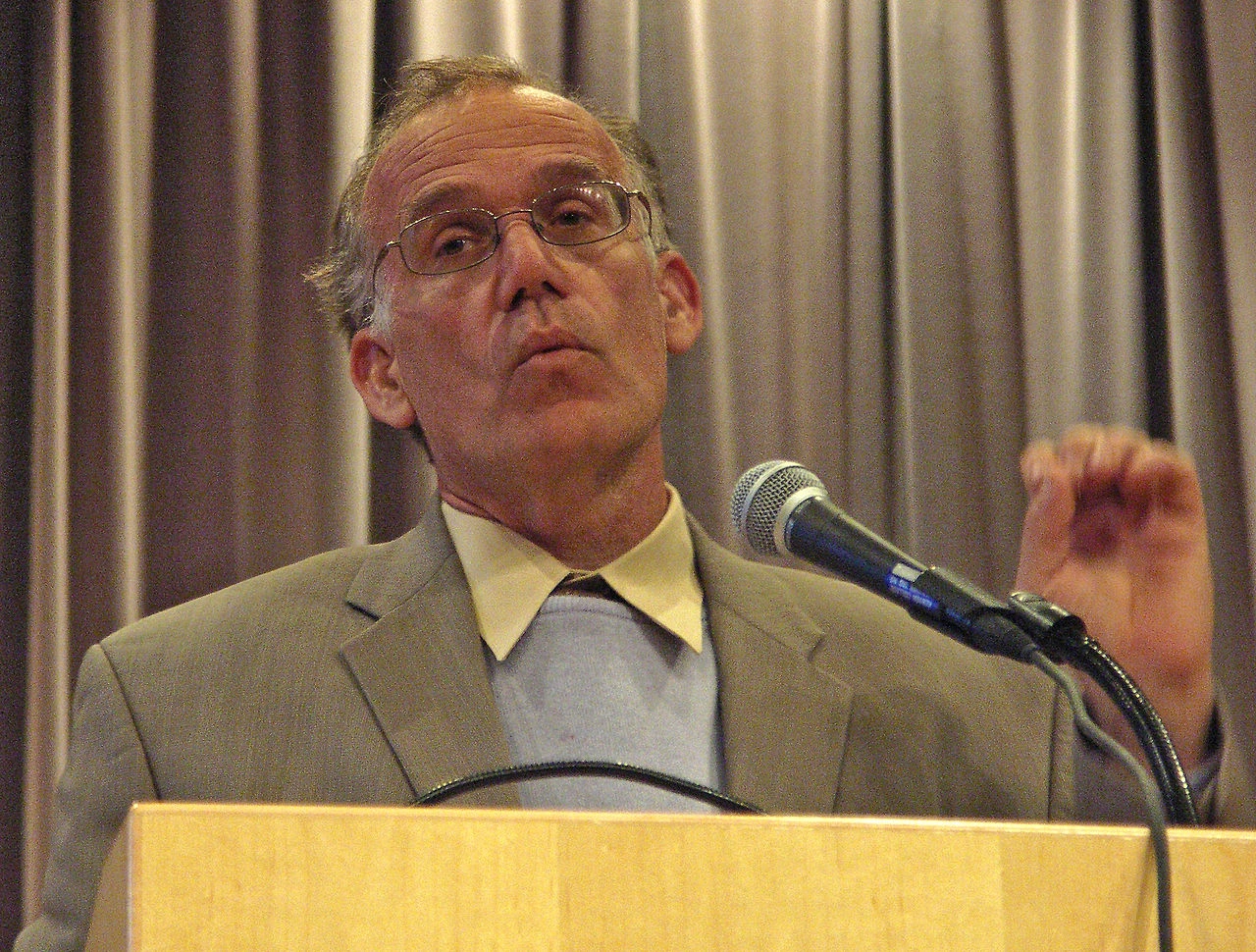
Who Victor Davis Hanson is, and why it matters for his finances
Victor Davis Hanson is a military historian, classicist, author, and political commentator. He holds the Martin and Illie Anderson Senior Fellow position at the Hoover Institution at Stanford University, a named endowed fellowship that places him among the institution's highest-profile scholars. He is also a professor emeritus of classics at California State University, Fresno, where he taught for more than two decades before transitioning to a primarily research and media role. On top of that, he has held the Wayne and Marcia Buske Distinguished Visiting Fellow in History position at Hillsdale College since 2004, served as Visiting Shifrin Professor of Military History at the U.S. Naval Academy in 2002-2003, and held visiting roles at Stanford and Pepperdine.
Why does that résumé matter for net worth? Because each of those roles represents a distinct compensation pathway. Unlike a single-employer professional, Hanson earns from multiple institutions, a syndicated column, book royalties, media appearances, and a speaking circuit. His wealth picture is layered rather than simple, which is exactly why estimates vary. The combination of academic prestige and high-volume media output places him in a category similar to other policy intellectuals who have built genuine multi-stream income over careers spanning 30-plus years.
What "net worth" actually means here, and what can be confirmed
Net worth is total assets minus total liabilities. For a private individual like Hanson, that means adding up everything he owns outright (property, investment accounts, cash, intellectual property value like book royalties) and subtracting any debts (mortgages, loans). The challenge is that none of those numbers are publicly reported for private citizens who are not elected officials or publicly traded company executives. There are no SEC filings, no mandatory financial disclosures, and no real estate records that add up to a clean total. What we do have are verifiable proxies: documented professional roles and their typical compensation ranges, publisher-confirmed book releases, syndication deals that have public histories, and media contracts where industry norms give us baseline figures.
Comparing Hanson's profile to other public intellectuals in the same tier is useful context. For instance, Victor Posner's net worth illustrates how dramatically wealth can vary even among high-profile Victors in the public eye, depending on whether the primary income is institutional, entrepreneurial, or investment-driven. Hanson's profile is primarily institutional and creative rather than entrepreneurial, which typically produces a more modest but more stable wealth accumulation.
Where his money actually comes from
Books and publishing

Publishing is Hanson's most documented and probably most significant long-term wealth driver. He has authored more than 40 books on military history, classics, and contemporary politics. Titles like "The Western Way of War," "Carnage and Culture," and "The Case for Trump" (published with his Hoover Institution affiliation front and center) have reached mainstream audiences, not just academic ones. A major publisher advance for a book by a well-known political commentator can run anywhere from $150,000 to $500,000 or more for a nationally recognized author. Royalty income from backlist titles adds to this over time. Over a 30-year publishing career at this output level, cumulative book income alone could plausibly reach seven figures.
Hanson has been a nationally syndicated columnist through Tribune Media Services, and he writes regularly for National Review Online and City Journal, where he holds a contributing editor role. blank" rel="noopener noreferrer">Since 2004, Hanson has written a weekly column syndicated by Tribune Content Agency. A Daily Signal article from Jan. 8, 2025 reports that Victor Davis Hanson joined The Daily Signal as a senior contributor, highlighting a newer editorial role among his income streams blank" rel="noopener noreferrer">holds a contributing editor role. Syndicated columnists at his profile level typically earn between $75,000 and $200,000 annually from column syndication fees, depending on the number of subscribing outlets and contract terms. Contributing editor arrangements at major publications may include additional honoraria. His media footprint has expanded significantly in recent years with television and podcast appearances, which carry their own appearance fees and indirectly drive book and speaking demand.
Academic and institutional roles
The Hoover Institution senior fellow role is likely his largest single institutional income source. Named endowed fellowships at Hoover typically carry salaries in the range of $200,000 to $400,000 annually, based on publicly available compensation data from comparable institutions and IRS Form 990 filings that cover Hoover's senior staff. His emeritus status at Cal State Fresno likely provides a pension rather than active salary. The Hillsdale College fellowship is primarily prestigious rather than highly compensated at the base level, though it generates speaking and event opportunities that carry their own fees.
Speaking engagements
Hanson is a sought-after speaker at conservative policy institutions, universities, and private events. Hillsdale College, for example, has hosted him for named lecture events, and institutions like the Naval Academy have held visiting professorships with him. For a commentator of his profile and demand, speaking fees typically range from $20,000 to $75,000 per engagement at private and corporate events, and $5,000 to $20,000 at academic or non-profit venues. If he does 20 to 30 paid engagements per year (a realistic assumption given his schedule and demand), that alone could generate $300,000 to $750,000 annually from speaking.
Assets, investments, and liabilities: what's known vs. what's guessed

Hanson grew up on a raisin farm in the San Joaquin Valley in California and has spoken publicly about his deep family roots in the area. It is reasonable to assume he holds real property in California, potentially including agricultural land that has appreciated significantly over the decades. California Central Valley farmland has seen price increases that can push acreage values well above $10,000 per acre for productive agricultural land. If he retains any family farmland, that asset alone could meaningfully contribute to his net worth range. However, this is an assumption based on public biographical statements, not confirmed property records.
On the liabilities side, there is no public record of significant debt, bankruptcy, or financial distress. As a long-tenured academic with multiple institutional affiliations, he likely has defined-benefit pension entitlements from California's public university system (CalPERS), which would reduce his need to hold liquid assets for retirement. Investment accounts, if typical for someone at his income level over a multi-decade career, could add another $1 million to $3 million to his overall picture. None of this is confirmed. These are modeled assumptions based on income level, career trajectory, and the financial patterns typical of senior academics who transition into high-demand media roles.
How this estimate was built, and how confident to be in it
The estimate range of $4 million to $8 million is constructed by layering documented income streams over time, applying publicly available industry compensation benchmarks, and making conservative assumptions about savings and asset accumulation. It is not sourced from a single database or financial disclosure. Think of it less like an audit and more like a financial detective exercise: you take what you can confirm (roles, titles, publication history, syndication presence) and apply what you know about what those things typically pay.
The confidence level here is moderate. The lower bound of $4 million reflects a conservative scenario where book advances were modest, institutional salary is at the lower end of the Hoover range, and property holdings are limited. The upper bound of $8 million reflects a scenario where long-tenured institutional salary, premium speaking fees, and appreciated farmland all compound over a 30-plus year career. The true figure could fall outside that range in either direction. A confirmed property search in Fresno County, California, or a review of Hoover's 990 filings (which cover senior compensation in the aggregate) would sharpen the estimate considerably. That is about as honest as you can get with public-figure net worth estimation when the subject has not disclosed figures.
For comparison, it is worth noting how other public figures with layered income streams are estimated. Sheriff Victor Hill's net worth is another example of how public roles can create income streams that are difficult to pin down without direct disclosure, and the estimation methodology in that case follows a similar pattern of combining salary data with public records. The same principle applies here.
Net worth estimate at a glance
| Income/Asset Source | Estimated Annual or Total Contribution | Confidence Level |
|---|
| Hoover Institution fellowship salary | $200,000–$400,000/year | Moderate (based on 990 comparables) |
| Book advances and royalties (career total) | $1M–$3M cumulative | Moderate (based on output and publisher tier) |
| Syndicated column and editorial fees | $75,000–$200,000/year | Low-Moderate (no public contract data) |
| Speaking engagements | $300,000–$750,000/year | Low (no disclosed schedule or fees) |
| Real property (California farmland, residence) | $500,000–$2M in assets | Low (no confirmed property records cited) |
| CalPERS pension / retirement assets | Reduces liquidity need; not additive | Low (estimated from tenure at CSU Fresno) |
| Overall net worth range | $4M–$8M | Moderate overall |
How to verify or update this estimate yourself

If you want to dig deeper or check whether this estimate has changed, here are the most practical steps you can take with publicly available tools.
- Check the Hoover Institution's IRS Form 990 filings, which are publicly available through ProPublica's Nonprofit Explorer or the IRS website. The 990 reports compensation for the five highest-paid employees, which often includes senior fellows. This can confirm or narrow the institutional salary estimate.
- Search California property records. Fresno County's assessor and recorder databases are publicly searchable. If Hanson holds agricultural land or residential property in his name or a family trust, it will appear there with assessed valuation data.
- Review California State University's salary database. CSU Fresno posts faculty salary data publicly. Even though Hanson is emeritus, his final active salary gives you a baseline for his pension calculation under CalPERS.
- Look up his book sales signals on Publisher's Marketplace or BookScan (subscription-based, but often cited in media). Reviews, award lists, and bestseller placements give indirect evidence of royalty-generating sales volume.
- Search for speaking bureau listings. Agencies like the Washington Speakers Bureau or Harry Walker Agency sometimes list fees or fee ranges for public speakers. If Hanson is listed, that gives a direct market-rate reference.
- Monitor any public financial disclosures. If Hanson ever serves on a publicly traded company's board or takes a government appointment requiring financial disclosure, those filings would immediately sharpen any net worth estimate.
It is also worth revisiting this estimate periodically. Net worth for media personalities and public intellectuals can shift quickly: a major book deal, a new media contract, or a change in institutional affiliation can move the number by millions. The research process is the same each time: document the roles, benchmark the pay, and triangulate with asset signals.
For readers who are curious how this kind of wealth compares to others in the broader public sphere, profiles like Victor Hedman's net worth show how professional athletes in long careers accumulate wealth at a much faster rate through contracts alone, while figures like Viktor Hovland's net worth illustrate the role of endorsement income alongside competition earnings. The contrast highlights how career type shapes the pace and composition of wealth building: an academic-turned-media commentator like Hanson builds more slowly but across more diversified sources.
Figures like Victor Mendelson's net worth and Victor Solomon's net worth also reflect how professionals in advisory, intellectual, or creative fields tend to accumulate net worth more incrementally than those in high-contract or equity-driven industries, a pattern very much consistent with what we see in Hanson's estimated financial profile. And if you are interested in how another Victor Hill compares in the public sector context, Victor Hill's net worth provides a useful parallel for a public figure whose income is primarily government-sourced and thus slightly more transparent through public salary databases.
The bottom line
Victor Davis Hanson's net worth is most credibly estimated at $4 million to $8 million as of April 2026, with $5 million to $6 million as the most defensible midpoint. That figure is built on decades of institutional fellowship income, a prolific publishing career, a syndicated column, and high-demand speaking. It is not confirmed by any public financial disclosure, and the real number could be higher if farmland assets are significant or lower if liabilities are greater than the public record suggests. The estimate is transparent about what it knows and what it does not, which is the most honest thing any net worth profile of a private individual can offer.