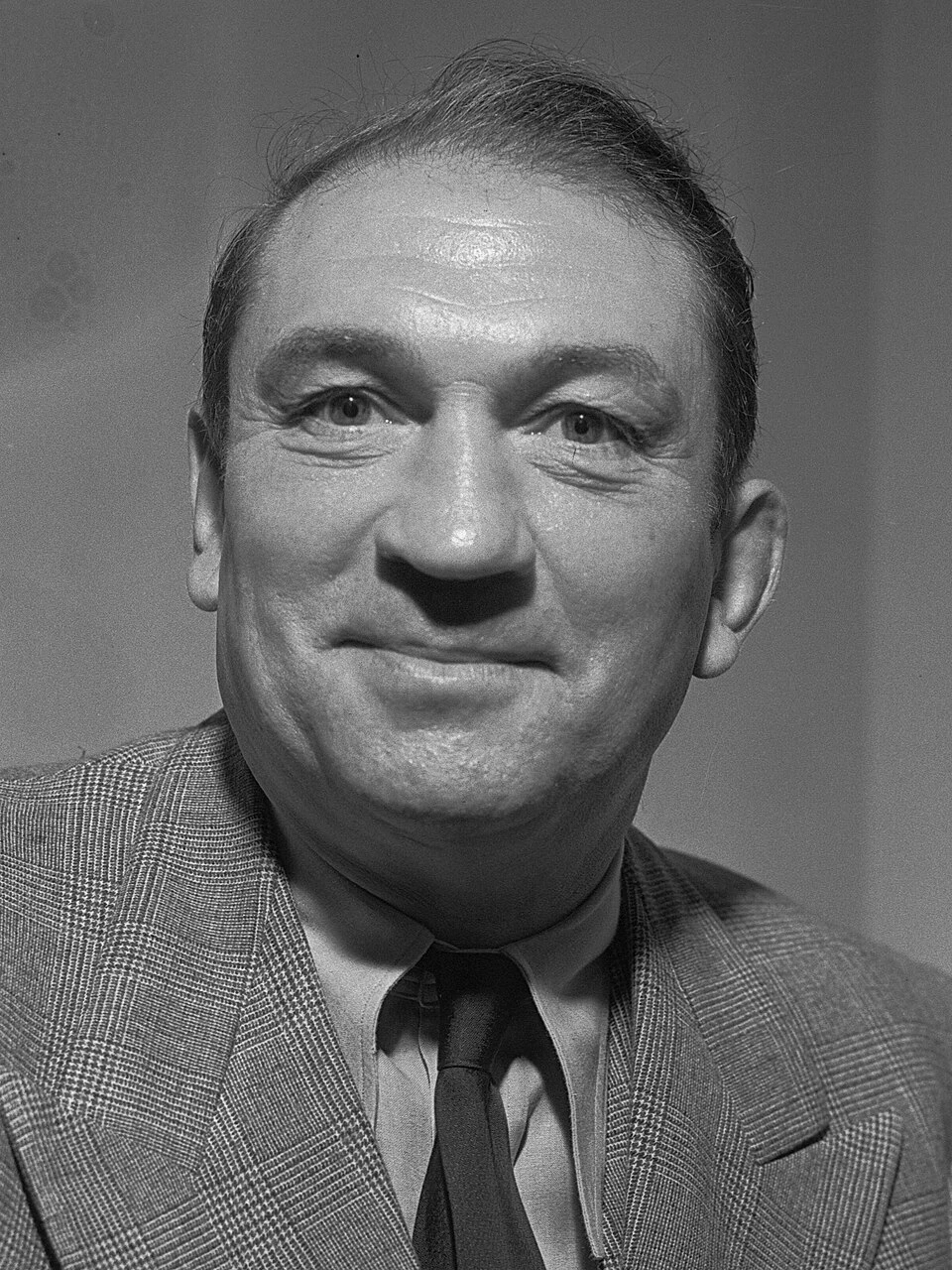
First, which Ivan Kaufman are we talking about?

A quick search for "Ivan Kaufman" turns up a few different people, so it's worth pinning down the right one before diving into numbers. The Ivan Kaufman most people are searching for in a financial context is Ivan Kaufman the real estate finance executive: Chairman, CEO, and President of Arbor Realty Trust, Inc. (NYSE: ABR), one of the larger publicly traded mortgage real estate investment trusts in the U. If you meant a different public figure and are also curious about how wealth is assessed for creative careers, see viktor autistic artist net worth for a related approach to estimating net worth Victor Kaufman. S. He also heads Arbor Commercial Mortgage and Arbor Multifamily Acquisition Company (AMAC). This is the profile backed by SEC filings, proxy disclosures, and publicly reported compensation, so it's the one this article focuses on. You may occasionally see references to an older New York appellate case involving an "Ivan Kaufman" in a mortgage lending partnership dispute, but that legal record is a separate matter and doesn't change how we estimate the executive's current wealth.
If you were searching for someone in entertainment, sports, or an unrelated field, this profile likely isn't the match. The name does appear in a handful of unrelated contexts online, which is part of why search results can feel inconsistent. For readers interested in related profiles in the same space, there's also a separately documented profile for Victor Kaufman, a different executive, worth comparing if you landed here by mistake. If you meant the net worth of Victor Kaufman, that profile will give the specific breakdown and sources used. Net worth figures for Victor Kaufman can also be affected by how each source calculates ownership and asset value.
The short answer: what is Ivan Kaufman's net worth?
The most credible estimated range for Ivan Kaufman's net worth as of early 2026 is approximately $150 million to $250 million, with the midpoint likely sitting somewhere around $175 to $200 million. That range is primarily driven by his equity stake in Arbor Realty Trust, accumulated executive compensation over many years, and his controlling interests through affiliated entities. Confidence in this estimate is moderate, not high, because the bulk of his wealth is tied to ABR's stock price, which has been volatile. The equity component alone can swing tens of millions of dollars in either direction depending on where ABR trades on any given day.
Some third-party sites publish figures that are considerably lower (in the $37 million range) because they're only counting directly held shares at a single point in time, while others may go higher by including affiliated entity interests. Neither extreme is necessarily wrong in isolation, they're just measuring different slices of the picture at different moments.
How that estimate is actually calculated
There are three main inputs that go into any credible estimate of Ivan Kaufman's net worth: his equity holdings in ABR, his annual compensation, and his interests in affiliated private entities. Here's how each one works.
Equity holdings (the biggest driver)

SEC Schedule 13G filings are the primary source here. As of December 31, 2025, Kaufman held a beneficial interest of approximately 15,143,777 shares of ABR common stock, representing roughly 7.2% of the class. That number includes shares held directly and through affiliated entities like ACM (Arbor Commercial Mortgage). At ABR's price range over the past 12 months (roughly $10 to $15 per share), that block of shares is worth somewhere between $150 million and $225 million on its own. GuruFocus, using a more conservative direct-holdings count of around 4.5 million shares, arrived at a value closer to $37 million, which illustrates exactly how much the denominator matters in these calculations. The 13G figure is the one that captures the full beneficial ownership picture, including shares over which he has voting or investment power through controlled entities.
Annual compensation (the income layer)
Arbor's 2024 proxy statement, filed with the SEC and cross-verified by AFL-CIO Paywatch, puts Ivan Kaufman's total compensation for fiscal year 2024 at $12,057,878. That figure includes base salary, cash bonuses, and equity-based compensation (RSUs and similar instruments). Over a career spanning decades at the top of a public company, this kind of annual comp compounds into substantial accumulated wealth, especially since equity awards vest and add to his total share position over time.
Private entity interests and other assets
Beyond publicly traded ABR shares, Kaufman controls or has interests in affiliated entities including Arbor Commercial Mortgage and AMAC. These aren't independently valued in public filings, but they're acknowledged in proxy beneficial ownership tables as part of the ownership structure. Any reasonable net-worth estimate should treat these as meaningful, if unquantifiable, additions to the public-equity figure. Real estate assets held personally or through private vehicles are also plausible given his industry, but those aren't publicly documented.
What his career actually generates: income streams and major assets
Kaufman's wealth is built on a few distinct streams, not just one big number. Understanding each one makes the estimate less abstract.
- Executive compensation from Arbor Realty Trust: $12+ million annually in salary, bonuses, and equity awards, as confirmed by the 2024 proxy Summary Compensation Table.
- ABR stock holdings: A beneficial stake of over 15 million shares makes ABR's stock price the single biggest variable in his net worth on any given day.
- Dividend income: Arbor declared a $0.30 per share dividend in connection with its full-year 2025 results. At 15+ million shares, that's a meaningful cash flow, though dividend levels can change with business conditions.
- Affiliated entity interests: His roles at Arbor Commercial Mortgage and AMAC represent additional equity interests not fully captured by the public stock price alone.
- Accumulated insider sale proceeds: Benzinga's tracking of Form 4 filings shows a history of insider transactions (sales, option exercises, tax withholding events) that have generated liquid proceeds over time, adding to cash or diversified assets outside ABR.
What could move the number up or down
Net worth estimates for executives with heavy stock concentrations are genuinely unstable, and Kaufman's situation is a good example of that. Several active factors could meaningfully shift the number in either direction.
Things that could push it higher
- ABR stock price recovery or appreciation: If ABR trades back toward its historical highs, the value of 15+ million shares increases dramatically.
- Continued vesting of equity compensation: Annual RSU grants that vest over time keep adding to his total share count and equity value.
- Business growth at Arbor's affiliated entities: Expansion at Arbor Commercial Mortgage or AMAC could increase the value of those private interests.
- Favorable resolution of ongoing litigation: Clearing legal uncertainty tends to support stock price recovery, which flows through to equity-based net worth.
Things that could push it lower
- Litigation exposure: Shareholders filed a derivative suit naming Kaufman and other executives, alleging improper lending practices and portfolio distress. A District of Maryland case (Lanba v. Arbor Realty Trust) and an Eastern District of New York case (Martin v. Arbor Realty Trust) are both active as of 2025. Legal judgments or settlements create direct liability and reputational drag.
- Short-seller pressure: Viceroy Research has published reports alleging concerns about management-related loans, including a 2018 loan to members of management. Short-seller campaigns can depress stock prices and create market-price volatility regardless of their eventual legal or factual outcome.
- ABR stock price decline: A sustained drop in ABR's share price reduces the value of his holdings proportionally. At $10 per share versus $15 per share, the difference on 15 million shares is $75 million.
- Distressed multifamily market conditions: Arbor's core business involves multifamily lending, and Kaufman has discussed market challenges on earnings calls. If distressed apartment sales continue to pressure the loan portfolio, earnings and dividends could decline, putting further pressure on the stock.
Why net worth estimates vary so much across websites
If you've searched around, you've probably seen wildly different numbers for Ivan Kaufman's net worth. If you are specifically trying to pin down Victor Swint net worth, compare how each source defines assets and share ownership. The variation isn't random, it comes down to specific methodological choices each site makes.
| Source type | Methodology | What they miss | Result |
|---|
| GuruFocus-style sites | Direct shares only × current price | Affiliated entity shares counted in 13G | Understates (e.g., ~$37M) |
| CoreStreet-style sites | Insider sale proceeds + current holdings | Private entity interests, compensation accumulation | Partial picture |
| Full beneficial ownership model | 13G shares × price + comp history + private entity estimates | Exact private entity values, liabilities | Broader range ($150M–$250M) |
| Outdated pages | Historic share counts or outdated prices | Recent stock movement and new filings | Stale and unreliable |
The core issue is that the "right" share count to use depends on whether you're counting direct ownership or full beneficial ownership, and that difference alone can be 3 to 4 times as large. Sites that pull from a single Form 4 snapshot or one GuruFocus data point will always show lower numbers than a model built from the Schedule 13G beneficial ownership disclosure. Neither is dishonest, they're just measuring different things.
Outdated figures are another real problem. If a site published an estimate when ABR was trading near $18 and hasn't updated it since the stock pulled back, the number is simply wrong for today's price. There's no automated correction mechanism on most estimate sites.
How to verify this yourself and stay current

If you want to check the estimate or track changes over time, the primary sources are all publicly accessible and free. Here's the practical path:
- SEC EDGAR (edgar.sec.gov): Search for 'Arbor Realty Trust' or CIK number for ABR. Look for the most recent DEF 14A (proxy statement) for the Summary Compensation Table, and the most recent Schedule 13G for Ivan Kaufman's beneficial share count. These are the two most important documents.
- Form 4 filings on SEC EDGAR: Search for Ivan Kaufman as an insider filer. Every buy, sale, RSU vesting, or tax withholding transaction is reported here within two business days of the event. This gives you a real-time picture of how his holdings are changing.
- Arbor Realty Trust investor relations page (arbor.com): Proxy materials, annual reports, and earnings press releases are hosted here. The Q4 and full-year 2025 results release, for example, confirmed the $0.30 per share dividend declaration.
- Justia.com or PACER (pacer.gov): Search 'Ivan Kaufman' and 'Arbor Realty Trust' to monitor active litigation. Justia is free for docket listings; PACER charges per page but gives you full document access.
- Barchart or Simply Wall St: These aggregate SEC data into more readable formats and can give you a quick secondary check on share counts and ownership percentages, though you should always trace back to the underlying EDGAR filing for confirmation.
- Google Finance or Yahoo Finance (ABR ticker): Check the current ABR share price. Multiply by the 13G share count (approximately 15.1 million as of 12/31/2025) to get a rough current equity value. That's the fastest single calculation for staying current.
One thing worth knowing: Schedule 13G filings are typically updated annually (filed in February for the prior year-end) unless a major ownership change triggers an amendment. So the most recent 13G may reflect a position from several months ago. For a more current read, combine the last 13G baseline with any Form 4 transactions filed since then to adjust the share count up or down.
The bottom line is that Ivan Kaufman's estimated net worth is a real, documentable figure with verifiable inputs, but it moves with ABR's stock price, evolves with annual equity compensation, and carries litigation-related uncertainty that other executive profiles don't always have. Anyone citing a single clean number without those qualifications is oversimplifying. The range of $150 million to $250 million, grounded in the 2025 beneficial ownership disclosure and 2024 compensation data, is the most defensible estimate available today, with the caveat that market conditions and legal developments can shift that meaningfully in either direction.