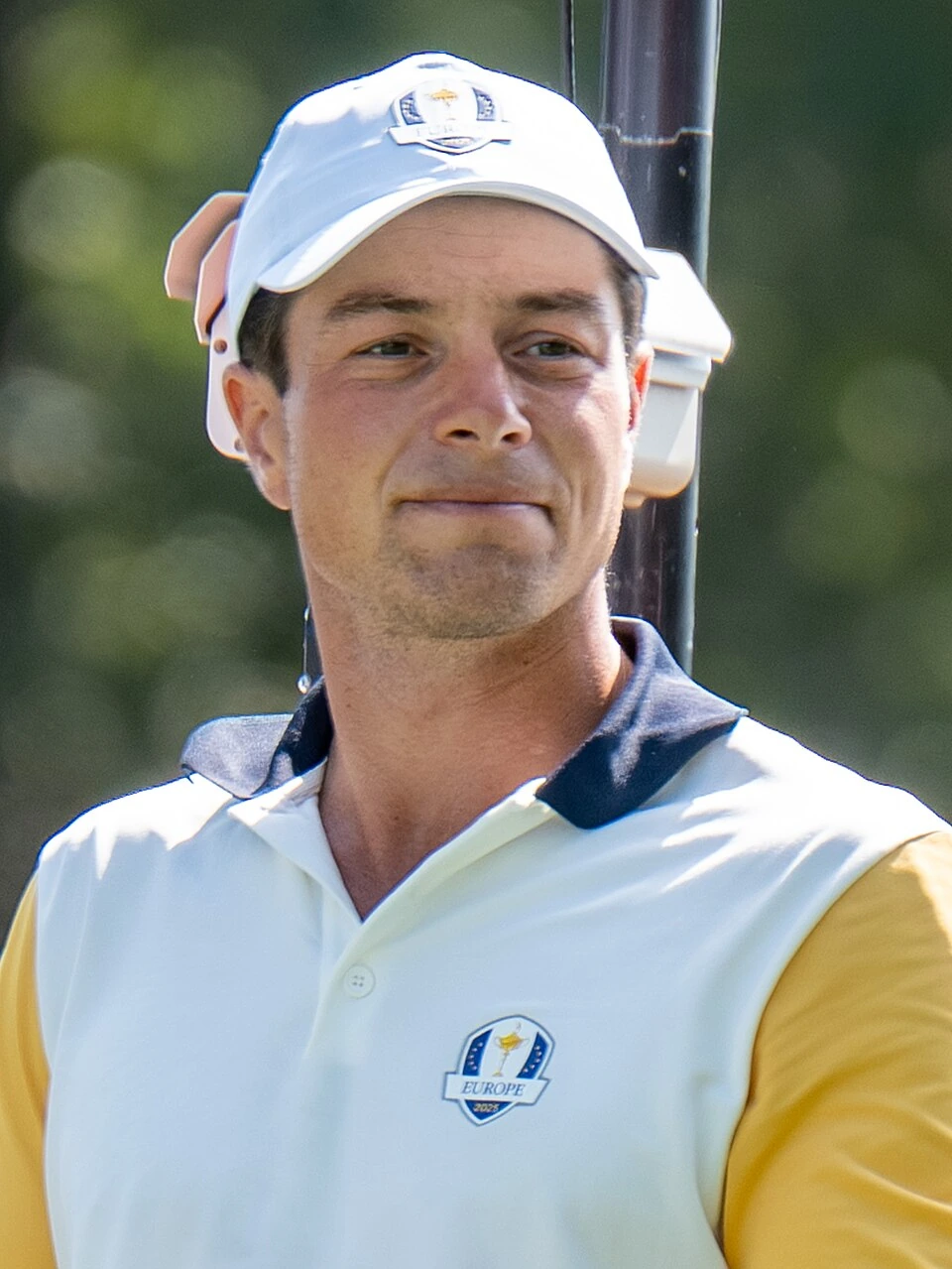
Viktor Hovland's net worth: the short answer
As of April 2026, a credible estimate puts Viktor Hovland's net worth somewhere between $25 million and $35 million, with $30 million being the most commonly cited figure. Celebrity Net Worth pegs it at exactly $30 million, and that number is a reasonable midpoint given what we know about his confirmed earnings. The bottom line: he is comfortably in the eight-figure range, built almost entirely on professional golf prize money and a growing portfolio of endorsement deals, rather than on family wealth, investments, or business ventures that are publicly documented.
What net worth actually means here

Net worth is simply assets minus liabilities. For an athlete like Hovland, the asset side includes cash and savings from tournament winnings, endorsement income, any real estate he owns, investment accounts, and the market value of sponsorship contracts if they carry guaranteed future payments. The liability side includes taxes owed, agent and caddie fees (which together can run 15 to 20 percent of prize money), mortgage debt if he carries any, and business expenses. The tricky part is that most of those details are private. What we can confirm are the gross earnings numbers. What we have to model are the deductions and the way those earnings have been deployed as assets.
It is also worth separating gross career earnings from net worth. A golfer who has earned $60 million in prize money on tour does not have $60 million sitting in a bank account. After federal and sometimes state taxes (often 37 percent at the top bracket), agent commissions (typically 4 to 5 percent), caddie payments (around 5 to 10 percent of winnings), travel costs, coaching fees, and equipment expenses, the take-home figure is substantially lower. A rough rule of thumb used by sports finance analysts is that net spendable income from prize money runs about 50 to 60 percent of the gross. That residual then grows or shrinks depending on investment decisions and lifestyle spending.
Where the numbers come from and how reliable they are
Unlike corporate executives whose compensation is disclosed in SEC filings, professional golfers have no mandatory public reporting requirement. That means every net worth estimate you see is built from three inputs: (1) publicly reported tournament prize money, which the PGA Tour does publish, (2) endorsement income, which is occasionally referenced in athlete profiles and industry trade reports but never fully itemized, and (3) assumptions about taxes, spending, and investment returns. PGA TOUR’s official stats page provides player career Official Money totals, which serve as a verified basis for earnings-based calculations blank" rel="noopener noreferrer">PGA Tour’s career Official Money totals. Spotrac tracks verified PGA Tour earnings and is one of the most reliable public sources for the raw prize money figure. Spotrac’s Viktor Hovland player page lists career earnings and breaks out yearly totals, which can serve as a verified prize-money anchor blank" rel="noopener noreferrer">Spotrac tracks verified PGA Tour earnings. Sporting News, citing Spotrac, reports that Hovland has earned approximately $61.58 million from Tour events, with an additional $5.5 million from the four major championships, for a combined tournament earnings figure approaching $67 million. Forbes has a profile page for Hovland, though it does not publish a straightforward net worth figure in the way Celebrity Net Worth does.
The honest answer on reliability: the $30 million estimate is a reasoned calculation, not a confirmed figure. No balance sheet has been published. The figure is consistent with the gross earnings data and standard deduction assumptions, but it could be higher if Hovland has made strong investment decisions, or lower if he has spent aggressively or carries significant liabilities. Treat the $25 million to $35 million range as a well-grounded estimate, not a fact.
Career tournament earnings, broken down

Hovland turned professional in 2019 after a decorated amateur career that included the 2018 U.S. Amateur title. His earning trajectory has been steep. In his first full seasons on Tour he was a consistent top-50 player, but his wins and near-misses accelerated sharply from 2021 onward. He won the BMW Championship and Tour Championship in 2023, which alone carries an eight-figure FedEx Cup bonus, and he has accumulated multiple international wins on the DP World Tour as well.
| Earnings Source | Reported Gross Amount | Notes |
|---|
| PGA Tour prize money | $61.58 million | Per Spotrac, as reported by Sporting News |
| Major championship earnings | $5.5 million | Across all four majors, per Sporting News |
| Combined tournament total | ~$67 million | Gross, before taxes and fees |
| Estimated post-tax/fee take-home | ~$33–40 million | Rough model at 50–60% retention rate |
| Sponsorship/endorsement income | Not publicly confirmed | Estimated tens of millions in total value |
The FedEx Cup bonus structure is worth flagging specifically. Winning the Tour Championship in 2023 came with a $18 million FedEx Cup prize, the largest single payout in Tour history at the time. That single check, even after taxes and fees, likely added $5 to $7 million to his net worth in one season. His career trajectory also benefits from the fact that he is still young (born 1997), meaning his peak earning years are still ahead of him.
Tournament prize money tells only part of the story. For elite golfers, endorsement income often equals or exceeds on-course earnings. Hovland's primary equipment and apparel deals include Ping (equipment), Adidas (apparel and footwear), and Srixon (ball). He also has deals with Norwegian energy company Equinor, luxury watch brand Rolex, and financial services partners. While the exact contract values are not public, comparable deals for a player of his ranking and global appeal typically run from $1 million to $5 million annually per major sponsor. With half a dozen active sponsors, his endorsement income likely runs $10 million or more per year.
Appearance fees add another layer. Top-ranked players are paid to appear at invitation-only events, exhibition matches, and overseas tournaments where appearance guarantees are standard. These fees are not reflected in prize money totals and are rarely disclosed. For a player with Hovland's global profile, particularly in Europe and Asia, appearance fees could add several million dollars annually on top of his tour and endorsement income.
To put his commercial appeal in context, Hovland is one of the most marketable players on Tour: young, Norwegian, fluent in English and Norwegian, clean public image, and genuinely elite. That combination makes him valuable to brands trying to reach both North American and European audiences. For comparison, it is worth looking at how other elite athletes in adjacent worlds have built their wealth. Take Victor Hedman's net worth as a case study: the Tampa Bay Lightning defenseman built his fortune through a similar mix of guaranteed contract income and sponsorship deals, demonstrating how elite athletes in individual sports (hockey and golf both have strong European markets) leverage dual-market appeal into significant commercial income.
The 'Viktor Hovland family net worth' question
Searches for 'Viktor Hovland family net worth' pop up regularly, and it is worth being direct about what that phrase can and cannot mean. There is no public evidence that the Hovland family operates as a shared financial entity, runs a family business, or has jointly documented wealth. Viktor's father, Harald Hovland, was a professor of chemistry in Norway. His family background is solidly middle-class academic, not a wealthy dynasty. When people search for 'family net worth,' they are almost certainly trying to understand Viktor's own wealth, not a multi-generational family fortune.
It would not be responsible to assign a number to 'the Hovland family's net worth' as a collective figure. Viktor's wealth is his own, earned through professional golf. Any estimate that tries to sum up a family balance sheet without documented evidence of shared assets, trusts, or business structures is speculation dressed up as research. Stick to Viktor's individual estimated net worth of $25 million to $35 million and treat the family framing as a search query rather than a financial category.
This kind of disambiguation matters on any net worth research site. Consider how the same issue comes up with public figures in other fields. When people look up Victor Davis Hanson's net worth or Victor Posner's net worth, the question often blurs personal and family or corporate wealth. Keeping those lines clear is what makes a net worth estimate actually useful.
How to track and update this estimate yourself

Net worth estimates for active athletes need to be refreshed regularly because the inputs change every week. Here is a practical checklist for keeping Hovland's figure current:
- Check Spotrac or the PGA Tour's official earnings page for updated prize money totals after each major event or FedEx Cup playoff.
- Watch for new sponsorship announcements in golf trade press (Golf Digest, Golf Channel, Golfweek). New deals or contract renewals shift the endorsement income estimate.
- Look at Forbes' annual sports earnings lists, typically published mid-year. If Hovland appears, Forbes will provide a gross earnings figure that includes endorsements.
- Monitor news about the LIV Golf situation. If Hovland were ever to sign with LIV or a similar league, the guaranteed contracts could substantially change the wealth calculation overnight.
- Note major wins or FedEx Cup bonuses specifically. The difference between finishing first and second in a FedEx Cup playoff can be several million dollars.
- Revisit Celebrity Net Worth and comparable aggregator sites annually. These are not always up-to-date in real time, but they do revise periodically.
The most important signal to watch is the FedEx Cup season-ending total. That single bonus structure has more impact on a top player's annual wealth accumulation than almost any other single variable. A strong FedEx Cup finish can add $5 to $18 million in a single year. A poor one adds nothing beyond regular tournament prize money.
It is also worth understanding what makes some net worth estimates more credible than others. Estimates backed by itemized verified data (tournament earnings from official sources, documented contracts) carry more weight than round numbers with no methodology. This is true whether you are researching a golfer or looking up someone like Victor Mendelson's net worth or Victor Solomon's net worth, both of whom built wealth through entirely different mechanisms where different sources carry different reliability. The methodology question is always the same: what is confirmed, what is modeled, and what is guessed?
One final note on timing: net worth estimates for active Tour players can shift by millions in a single tournament. If Hovland wins a major or the FedEx Cup in 2026, expect aggregator sites to revise upward within a few weeks. If you are reading this close to a major championship result, check Spotrac first, add the major earnings figure Sporting News previously reported at $5.5 million cumulative, and apply the 50 to 60 percent post-expense retention model to get your own updated estimate. It is not a perfect science, but it gets you to a defensible range. And for someone trying to look up Sheriff Victor Hill's net worth or Victor Hill's net worth, the same methodology principle applies: anchor to verified income sources first, then model the rest.