
Bert Vogelstein's net worth is estimated in the range of $50 million to $150 million as of mid-2026, driven primarily by equity stakes in biotech spinouts, prize money from major scientific awards, decades of academic compensation, and advisory board roles. If you are specifically looking for the fred vogel net worth figure, remember that this article reports a confirmed floor and an estimated range because private equity details are not fully public. That range is wide because most of his wealth sits in private company equity and licensing arrangements that are not publicly disclosed in precise dollar terms. What is confirmed is that he holds or has held equity in companies that have collectively attracted or returned hundreds of millions of dollars in investment and acquisition value.
Bert Vogelstein Net Worth: Sources, Estimate, and How It’s Calculated

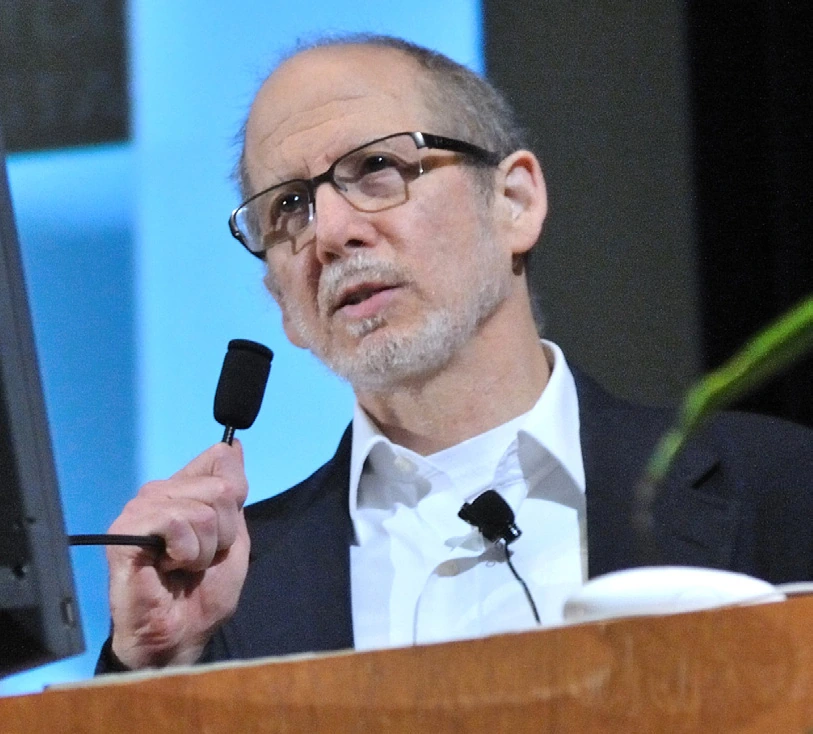
Who Bert Vogelstein is (and why people search his net worth)

Bert Vogelstein (born 1949) is one of the most cited scientists alive. He is the director of the Ludwig Center at Johns Hopkins, a Clayton Professor of Oncology and Pathology, and a Howard Hughes Medical Institute investigator at the Sidney Kimmel Comprehensive Cancer Center. His research on the genetic mutations that drive colorectal cancer and his broader contributions to cancer genomics have shaped modern oncology over the past four decades. He is not a celebrity in the entertainment sense, but within science and biotech circles he is as well-known as it gets.
People search for his net worth for a few different reasons. A search for dusty vogelpohl net worth can lead to confusion, so it helps to confirm the correct person before comparing wealth figures. Some are biotech investors or journalists tracking the financial outcomes of academic founders whose laboratory work spins into commercial companies. Others are curious after reading about the Haystack Oncology acquisition or the Thrive Earlier Detection launch.
A smaller group may be confused with similarly named individuals. If you landed here after searching for someone in entertainment or a different industry, you are in the right place to clarify: this is the oncologist and cancer researcher at Johns Hopkins, not a musician, athlete, or businessman with a similar name.
What "net worth" means and how this site estimates it
Net worth is total assets minus total liabilities. That is the standard definition used by the IRS in personal wealth statistics and by the Federal Reserve in household wealth accounting. For a private individual like Vogelstein, that means adding up the value of real estate, investment accounts, equity in private and public companies, cash, and other assets, then subtracting mortgages, tax obligations, known debt, and any legal settlements. The honest challenge is that most of those inputs are not publicly reported for private citizens.
This site builds estimates starting from confirmed public information: SEC filings for any equity positions in public companies, real estate transaction records, verified contract or compensation disclosures, and reporting from credible financial outlets like Forbes and Bloomberg. From there, reasonable assumptions are applied to fill gaps, particularly for private company equity, which is the biggest wildcard for someone like Vogelstein. Because private wealth inputs are not always available, figures are published as clearly labeled ranges rather than a single precise number. Net worth is not legally required to be disclosed for private individuals, so every estimate here carries that caveat explicitly.
The net worth estimate: what is confirmed versus what is estimated

The most defensible floor for Vogelstein's confirmed wealth comes from two publicly documented data points. First, he received a Breakthrough Prize in Life Sciences in 2013, which carried a cash award of $3 million, as reported by Johns Hopkins' own news hub at the time. Second, a 2016 conflict-of-interest disclosure in ProPublica's Dollars for Profs database shows a disclosed financial relationship with Sysmex Inostics valued in the $60,000 to $79,999 range for that year alone, indicating ongoing income from advisory or equity relationships with commercial entities.
The larger and less precisely quantifiable portion of his estimated wealth comes from biotech equity. Johns Hopkins Technology Ventures explicitly states that Vogelstein holds equity in Thrive Earlier Detection, the company commercializing the CancerSEEK multicancer blood test he co-developed. Thrive launched in May 2019 with $110 million in Series A financing. Separately, Haystack Oncology, described by the Baltimore Business Journal as a Hopkins spinout started by Vogelstein, was acquired by Quest Diagnostics in a deal valued at up to $450 million, announced in April 2023. The exact size of his equity stakes in these companies has not been publicly disclosed, so the financial benefit to him personally is estimated rather than confirmed.
| Wealth Component | Confirmed or Estimated | Approximate Value / Notes |
|---|---|---|
| Breakthrough Prize in Life Sciences (2013) | Confirmed | $3 million cash award |
| Sysmex Inostics advisory/equity income (2016 disclosed year) | Confirmed (disclosed range) | $60,000 – $79,999 for disclosed year |
| Johns Hopkins faculty salary (career) | Estimated | Senior professor compensation over decades; not publicly disclosed |
| Thrive Earlier Detection equity stake | Confirmed existence; value estimated | Company raised $110M Series A in 2019; stake size undisclosed |
| Haystack Oncology equity stake | Confirmed existence; value estimated | Acquired by Quest Diagnostics for up to $450M (Apr 2023); stake size undisclosed |
| Scientific advisory board roles (Exact Sciences, others) | Confirmed involvement; compensation estimated | Board fees and equity grants typical but not disclosed publicly |
| Howard Hughes Medical Institute investigator stipend | Confirmed role; amount not fully public | HHMI investigators typically receive research funding, not personal income |
Putting this together: the confirmed floor is roughly $3 million in prize money plus several years of advisory income. The estimated ceiling is driven by the potential value of his equity in Thrive and Haystack, which, even at a small founder percentage of deals worth hundreds of millions of dollars, could comfortably place total wealth well above $50 million. The $50 million to $150 million range reflects that uncertainty.
If you are searching for Bert Vogelstein net worth, this $50 million to $150 million range summarizes the confirmed floor and the potential upside from equity-backed ventures Vogelstein net worth estimate. It would not be responsible to publish a single number here without the private company equity disclosures that do not exist in the public record.
Income streams and assets that likely drive his wealth
For an academic scientist of Vogelstein's stature, wealth accumulates differently than it does for an entertainer or a business executive. There is no single salary announcement or public pay filing. Instead, wealth builds across several overlapping channels over a long career.
- Biotech founder equity: The most significant driver. Co-founding or being listed as a key inventor on commercial spinouts like Thrive Earlier Detection and Haystack Oncology means equity that can convert into substantial cash when companies are funded or acquired.
- Licensing and royalty income: Johns Hopkins licenses patents arising from faculty research. Vogelstein's foundational work on cancer genetics has generated licensing activity for decades. Individual royalty splits for inventors are not publicly reported but are standard in academic technology transfer.
- Scientific advisory board compensation: His Catalio Capital team page lists advisory roles with companies including Exact Sciences and Sysmex. Advisory board positions typically combine cash fees and equity grants.
- Major prize awards: The $3 million Breakthrough Prize is the largest single confirmed cash amount. Other prizes in his career, including the Lasker Award and others, carry additional cash components.
- Academic salary: A senior professor and department director at a major research university earns a competitive salary, often in the $300,000 to $600,000 range annually at institutions like Johns Hopkins, though the exact figure is not publicly disclosed.
- Investment returns: Prize money, advisory fees, and salary accumulated over decades, if invested conservatively, compound into meaningful assets over time.
Career timeline and the milestones that matter for wealth

Understanding when Vogelstein's wealth likely accelerated requires a quick look at his career arc. He was not wealthy by virtue of family background or early business success. His wealth built slowly through academia and then accelerated sharply as the commercial applications of his research became real businesses.
- 1970s–1980s: Early career at Johns Hopkins, foundational research on APC gene mutations and colorectal cancer. This period established his scientific reputation but generated minimal personal wealth beyond salary.
- Late 1980s–1990s: Landmark publications on tumor suppressor genes and cancer genomics. Patent filings begin. Licensing income from foundational discoveries starts, though it remains modest compared to later commercial activity.
- 2000s: Recognition accelerates with major awards. Continued laboratory output creates the intellectual property foundation for future spinouts. Advisory relationships with early biotech firms begin.
- 2013: Breakthrough Prize in Life Sciences, $3 million cash award. This is the first confirmed large single wealth event.
- 2016: Conflict-of-interest disclosure with Sysmex Inostics confirms ongoing commercial relationships generating income in the $60,000–$79,999 range for that year.
- 2018–2019: CancerSEEK research published; Thrive Earlier Detection launches with $110 million Series A financing. Vogelstein confirmed as equity holder by Johns Hopkins Technology Ventures.
- 2023: Haystack Oncology, a spinout tied to Vogelstein's research, acquired by Quest Diagnostics in a deal valued at up to $450 million. This is likely the most significant single wealth event of recent years, though the precise personal payout is not public.
How to verify or update this estimate
If you want to pressure-test this estimate or look for updates, here are the most reliable sources to check, roughly in order of reliability.
- ProPublica Dollars for Profs: Search Bert Vogelstein to find all disclosed conflict-of-interest filings tied to Johns Hopkins. This covers industry relationships that faculty are required to report. It will not show total net worth but it documents income streams from commercial entities.
- SEC EDGAR: If Thrive Earlier Detection or any company he holds equity in ever files for an IPO or becomes public, founder equity stakes will appear in S-1 filings. Search EDGAR for his name as an officer or significant shareholder.
- Baltimore Business Journal and STAT News: Both have reported on the Haystack Oncology acquisition and Thrive launches. Bookmark searches for his name on these outlets for deal updates that may include financial terms.
- Johns Hopkins Technology Ventures (jhtv.jhu.edu): JHTV publishes press releases when faculty spinouts receive major funding or are acquired. This is where the Thrive equity confirmation came from originally.
- Gruber Foundation and Breakthrough Prize websites: These confirm past prize amounts and are reliable for verifying award income.
- Forbes and Bloomberg wealth trackers: Neither currently lists Vogelstein on a named wealth list, which itself signals that confirmed liquid wealth has not crossed the threshold that triggers inclusion on major public rankings. That is useful context for the estimate.
A few red flags to watch for when evaluating any net worth figure you find elsewhere: sources that claim a single precise number (like '$80 million exactly') without citing where that figure comes from; sites that do not distinguish between confirmed income and equity value estimates; and sources that confuse Bert Vogelstein with other individuals who share a similar name. Vogelstein’s disposal net worth is best understood as a range that reflects both confirmed cash earnings and estimated equity value vogel disposal net worth. If a figure appears without methodology, treat it as speculation.
This estimate will also need updating if Thrive Earlier Detection or its successor entities go public or are acquired with disclosed terms, if new conflict-of-interest filings appear in ProPublica's database, or if Vogelstein receives additional large prizes. The Haystack Oncology deal terms were described as 'up to $450 million' with milestone payments, meaning the final payout to equity holders including Vogelstein may not yet be fully resolved as of mid-2026. That is the single most important open variable in refining this estimate.
For readers who arrived here while researching other public figures in similar spaces, it is worth noting that wealth profiles for academic founders and researchers follow a different pattern than those for entertainers or media personalities. The process of researching someone like Vogelstein has more in common with tracking a biotech entrepreneur than with pulling a celebrity net worth figure.
FAQ
Why does the estimate for Bert Vogelstein net worth come as a range instead of one exact number?
For most of his wealth, the largest driver is equity in private biotech companies. Private-company ownership percentages, liquidation terms, and any later dilution are usually not published, so analysts must model value using deal-level headlines and plausible ownership ranges, which is why a wide band is used rather than a single figure.
Does “net worth” for Bert Vogelstein mean he actually has that much cash available?
Not necessarily. Net worth includes the estimated value of assets like private equity and real estate, which can be illiquid. A higher net worth estimate may reflect theoretical value on paper that cannot be realized until an IPO, sale, or redemption event with disclosed economics.
Could the Haystack Oncology acquisition value be delayed or different from the headline “up to $450 million”?
Yes. “Up to” deal terms often include milestones, earn-outs, and timing that affects when money is paid and how much reaches each equity class. That means the personal payout linked to Vogelstein’s stake may not align with the peak deal headline, and the estimate can change as milestones are finalized.
How do dilution events and multiple funding rounds affect estimates of his equity value?
If Thrive or Haystack raised additional rounds after Vogelstein acquired his stake, his percentage ownership could have been diluted. Because dilution ratios are not always reflected in public summaries, equity value estimates may be overstated or understated unless the analysis accounts for cap tables or equivalent disclosure.
What is the difference between prize cash, advisory income, and equity value in these calculations?
Prize cash and disclosed advisory income are typically easier to verify because they are tied to awards or reported relationships. Equity value is more uncertain because it depends on private-company valuation changes, financing structure, and exit outcomes. That is why the “floor” is dominated by cash-like items, while upside is equity-driven.
If I see a website claiming Bert Vogelstein net worth is a single precise number, should I trust it?
Be cautious if there is no clear methodology or if the figure does not separate confirmed cash earnings from equity valuation assumptions. A credible estimate should explain what inputs are confirmed versus modeled, and it should indicate the uncertainty around private equity.
Could Bert Vogelstein’s estimate be confused with another similarly named person, and how can I avoid that?
Yes. The article notes frequent mix-ups from similar names. A quick safeguard is to confirm professional context first, for example his Johns Hopkins roles, the Ludwig Center directorship, and his cancer genomics work, before comparing any net worth number found elsewhere.
What would most likely cause Bert Vogelstein net worth to move upward or downward in the next update?
Upward moves typically follow public exits, IPOs, or acquisitions where equity terms are disclosed more precisely. Downward moves can happen if equity is diluted, if valuations reset in later funding rounds, or if disputes lead to reduced payouts. New conflict-of-interest disclosures can also change the income component of the estimate.
How can someone “pressure-test” this kind of Bert Vogelstein net worth estimate themselves?
Start by listing confirmed cash inputs (such as known awards) and any clearly disclosed compensation or advisory relationships. Then, for equity, compare multiple deal scenarios using different plausible ownership percentages, and check whether the estimate assumes fully realized value or only potential value that depends on milestones and timing.
Fred Vogel Net Worth: Estimate, Sources, and How to Verify
Estimate Fred Vogel net worth with sources, how it’s calculated, what’s verified vs assumed, and steps to verify.