
Victor Willis's net worth in 2026 is most reasonably estimated in the range of $10 million to $30 million, with the lower end supported by conservative royalty and licensing valuations and the upper end reflecting CelebrityNetWorth's $30 million figure. A claim from a Willis representative puts the number closer to $75 million, tied to an alleged $150 million catalog valuation, but that figure has not been independently verified and should be treated as unconfirmed for now.
Victor Willis Net Worth: Estimate Range and How It’s Calculated

Marcus Holloway
29 Apr 2026
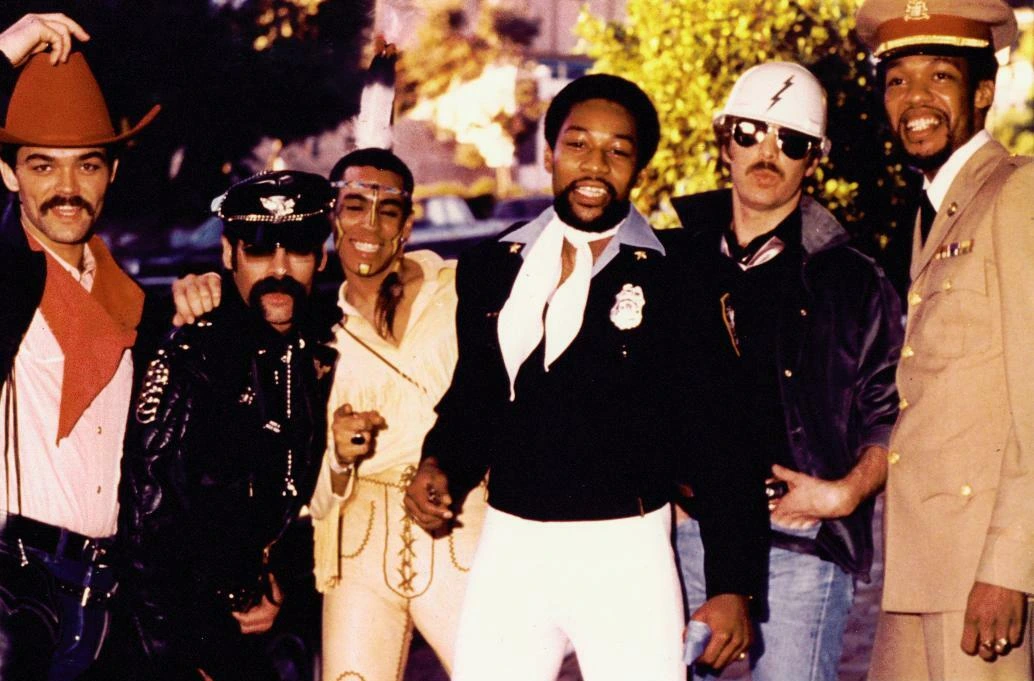
Who Victor Willis is

Victor Edward Willis (born July 1, 1951) is best known as the lead singer and one of the founding members of Village People, the disco group that became a cultural institution in the late 1970s. More importantly for understanding his finances, Willis is also a credited co-writer on some of the most-played songs in American pop history. He co-wrote "Y.M.C.A." (released October 1978), "In the Navy," and "Go West" alongside French producer Jacques Morali and Henri Belolo. Those three songs alone have generated decades of licensing, sync, and performance royalty income.
Willis's financial story is unusual because it is heavily shaped by copyright law rather than record sales alone. A 2012 U.S. District Court ruling allowed him to terminate certain copyright transfers, giving him a 33% share of copyrights in key Village People songs. Later litigation went further: a jury found that Belolo was not a lyric co-writer on 13 songs, effectively giving Willis a 50% ownership stake in those tracks. blank" rel="noopener noreferrer">In 2017, Willis was also granted sole use of the "Village People" name, which opened additional licensing and touring revenue avenues. These legal wins are the core reason why his estimated net worth sits meaningfully higher than a typical retired disco-era performer's would.
The headline numbers and what they actually mean
There are three figures floating around online, and they differ significantly. Here's how to read each one:
| Source | Estimate | Basis / Caveat |
|---|---|---|
| CelebsMoney (2026) | $12 million | Single-point estimate; no detailed public-record methodology provided |
| CelebrityNetWorth | $30 million | Conservative figure; site explicitly prefers this until catalog valuation is proven |
| Willis representative (May 2025) | ~$75 million | Based on a claimed $150 million Village People catalog valuation; unverified externally |
The $12 million figure from CelebsMoney is a reasonable floor: it roughly captures what a co-writer holding partial ownership of several evergreen songs might accumulate over decades of steady royalties, minus taxes and living expenses, without factoring in any catalog appreciation. The $30 million figure from CelebrityNetWorth is the most commonly cited and sits in the middle. CelebrityNetWorth explicitly calls it a conservative estimate and notes the site would need independent confirmation of the $150 million catalog claim before moving the number higher. The $75 million representative claim is worth knowing about but should not be accepted as fact until a verified sale, appraisal, or audit supports it.
How the estimate is built: sources and methodology

Net worth estimates for musicians like Willis are constructed from a combination of confirmed facts and informed assumptions. The confirmed layer here includes: Willis's songwriting credits on multiple high-performing songs (verifiable through ASCAP's ACE repertory database and BMI's Songview search), his documented copyright ownership stakes (established through court records, including the 2012 ruling and subsequent jury finding), and his confirmed control of the Village People name since 2017. These are not guesses; they are verifiable through public legal records and PRO databases.
The assumption layer is where estimates diverge. Royalty income from songs like "Y.M.C.A." is not publicly disclosed in detail. Analysts typically apply a multiplier to estimated annual royalty income to arrive at a catalog value, then add liquid assets and subtract liabilities. The problem is that neither the annual royalty figure nor the multiplier is publicly confirmed for Willis specifically. A song like "Y.M.C.A." is genuinely one of the most-licensed songs in history, used in everything from sporting events to political rallies (including the January 2025 Trump inauguration events), so the royalty base is real and substantial. But turning that into a hard dollar figure requires assumptions that different sources make differently, which is why the range is so wide.
Where the money comes from
Songwriting royalties and publishing income

This is by far the most significant income stream. Willis holds partial copyright ownership in "Y. M. C.
A. ," "In the Navy," "Go West," "Macho Man," and more than a dozen other Village People songs. Songwriting royalties flow from two main sources: performance royalties (paid every time a song is played on radio, TV, in a venue, or streamed) and mechanical royalties (paid for reproductions, including streaming). Sync licensing, which is income from songs used in films, TV, ads, and live events, is a third and often very lucrative channel for catalog songs this well-known.
Given the continued heavy rotation of "Y. M. C. A.
" at sports stadiums, political events, and pop culture moments, the annual performance royalty income alone is likely substantial, though the exact figure is not public.
Catalog ownership and potential appreciation
The catalog valuation claim (the $150 million figure cited by Willis's representative) reflects the current market for music rights, where private equity and music IP funds have been paying high multiples for proven catalog assets. Whether the Village People catalog is actually worth $150 million has not been confirmed by any reported sale or third-party appraisal. What is reasonable to say is that partial ownership of songs with "Y.M.C.A."'s track record of licensing activity would represent a meaningful asset on any balance sheet. Ongoing litigation, including a 2025 federal case involving "Go West" (Willis v. Tennant et al.), could affect how cleanly that asset can be monetized.
Touring and live performance
Since regaining control of the Village People name, Willis has the ability to tour and perform under that brand. In Can't Stop Prods., Inc. v. Sixuvus, Ltd., the dispute materials describe a 2017 settlement context that included an exclusive 10-year live-performance license for the Village People marks tied to the settlement terms and interim performance and trademark restrictions. Village People released a studio album, "A Village People Christmas," in 2018, and the group has continued performing. Live performance income for a legacy act of this profile at festivals, private events, and themed shows is real but not reliably quantifiable from public data. It is safe to treat touring as a supplementary income stream rather than the primary one.
Trademark and name licensing
Control of the "Village People" trademark (granted in 2017) means Willis can license the name commercially. This could include merchandise, branded events, and media deals. The financial specifics are not public, but having sole use of a globally recognized brand name is an asset with real, if hard-to-quantify, value.
Assets, liabilities, and what we can and can't confirm
The most defensible asset in Willis's portfolio is his intellectual property: the partial copyright ownership stakes in Village People songs, confirmed through court records. These are real, documented, and generate ongoing income. The Village People trademark is a second confirmed asset.
What is not publicly confirmed: any real estate holdings, investment portfolios, bank account balances, or specific debt obligations. No verified real estate records or financial disclosures have been reported for Willis. That means the estimates above are based almost entirely on the IP and royalty income side of the ledger. It is entirely possible that personal real estate or investments add to the total, but it would be speculation to include a specific figure. Similarly, legal costs from the multiple copyright disputes Willis has been involved in over the years represent real liabilities that could offset gross income, but no figures are public.
What's moving his net worth right now
A few recent developments are worth tracking as signals of where his net worth may be heading. The Village People's performance at Trump inauguration-related events in January 2025 generated significant media attention around "Y.M.C.A.," which typically triggers a spike in streaming, sync licensing interest, and public performance. Those spikes translate to royalty income, though with a delay of several months to a year depending on how PRO payments are structured.
The ongoing 2025 federal case involving "Go West" (Willis v. Tennant et al.) is directly relevant to royalty flows. If Willis prevails and gains cleaner or expanded ownership rights to additional songs, the income and catalog valuation both increase. If the litigation is costly and prolonged, legal fees eat into net income. Willis also reportedly threatened legal action against news organizations in late 2024 over characterizations of "Y.M.C.A." These disputes do not directly affect net worth in the short term, but they signal that Willis is actively managing and defending his IP, which has historically been what drives his wealth.
The broader music catalog market also matters. If catalog valuations continue to be strong (as they have been through the mid-2020s), the paper value of Willis's ownership stakes would rise even without any new activity. A sale or licensing deal at a confirmed price would dramatically clarify the picture.
How to verify these numbers and avoid bad information

The most reliable verification steps are also the simplest. Start with the copyright records: the 2012 U.S. District Court ruling and subsequent jury findings are public legal documents that confirm Willis's ownership stakes in specific songs. Those are not estimates; they are court-verified facts. You can also search ASCAP's ACE repertory database or BMI's Songview to confirm Willis's name as a registered writer on specific songs, which establishes that royalty payments flow to him.
For the net worth estimates themselves, treat any single-point figure without methodology as a rough guess, not a confirmed number. CelebrityNetWorth's $30 million figure is the most transparent of the common estimates because the site explicitly explains its reasoning and discloses that a higher claim exists but has not been verified. CelebsMoney's $12 million figure is presented as a 2026 estimate but without a detailed breakdown, so it is harder to sanity-check. The $75 million representative claim requires independent corroboration, such as a confirmed catalog sale or a third-party appraisal, before it should be treated as credible.
A good practical check: if you see a Willis net worth figure significantly above $30 million or below $10 million on any site, look for the methodology. If you want the current figure people quote, see the latest estimates discussed in our victor webster net worth section. A figure that high needs a confirmed catalog valuation to support it. A figure that low would need to explain away decades of royalty income from one of the most-played songs in American history. Neither extreme holds up without evidence.
For context, other figures with the name Victor who have documented public profiles, including Victor Webster, Victor Blackwell, Victor Glover, and Victor Butler, have their own separate net worth profiles that are unrelated to Willis's. If you are specifically looking for the victor butler net worth figure for Victor Butler, double-check it is the correct person since this article covers Victor Willis.
A separate article may be needed to cover Victor Glover’s net worth specifically, since it is a different person from Victor Willis. A common source of confusion is that separate people like Victor Blackwell have their own Victor Blackwell net worth figures that are unrelated to Willis. Because Victor Webster is a different person, his own net worth profile should be verified separately from Victor Willis's figures Victor Webster net worth.
The overlapping search results can occasionally create confusion when looking for specific financial data, so confirming the full name and career context before relying on any figure is always worthwhile.
FAQ
Is Victor Willis’s net worth mostly from touring, or mainly from music rights royalties?
It’s mainly rights-based royalties and licensing income. Touring can add revenue after regaining use of the “Village People” name, but the article’s core wealth driver is the confirmed partial ownership of high-rotation songs and the resulting performance, mechanical, and sync royalties.
Why do some sites show Victor Willis net worth figures far above $30 million?
Those numbers usually depend on assuming a specific catalog sale value or applying a large multiplier to annual royalties. Without a publicly reported sale, appraisal, or detailed calculation, higher figures are effectively speculation and can be overstated if they treat contested ownership as fully monetizable.
What could reduce the net worth estimate even if “Y.M.C.A.” royalties are strong?
Litigation costs, ongoing disputes that delay monetization, and any required revenue splits to other claimants can all shrink net proceeds. The article notes legal fees and uncertainty around asset “cleanliness,” which can materially affect net worth versus gross royalty potential.
How long after a big event does “Y.M.C.A.” usually translate into royalty income?
Royalty payments often arrive with a delay, commonly several months to a year, depending on PRO reporting cycles and how quickly licensing partners submit usage reports. That’s why spikes from high-visibility appearances do not always show up in near-term cash flow estimates.
Do performance royalties and streaming royalties show up the same way for a catalog owner?
No. Performance royalties (broadcasts, venues, radio/TV, many public performances) are tracked differently from mechanical royalties tied to reproductions and streaming. For net worth modeling, mixing these streams can lead to over- or underestimating total annual income if the assumptions are not separated.
Does owning song copyrights automatically mean Willis receives 50% of all income from every Village People song?
Not automatically. Copyright ownership percentages can vary by song and by which rights were transferred or were successfully reclaimed. The article highlights different legal outcomes across songs, so the royalty split can differ track by track.
What should I check to verify whether a net worth claim matches the underlying music rights?
Cross-check songwriting registrations and ownership stakes song-by-song using PRO repertory databases, then reconcile that with what percentage ownership a credible source assumes. If a net worth figure implies full ownership across the catalog when the legal record shows partial or contested stakes, it’s a red flag.
Could Willis’s control of the “Village People” name increase net worth even without new hit songs?
Yes, because trademark control can support licensing of the brand for events, merchandise, and media uses. The amount is usually not public, so it’s best treated as an additional value driver, not a replacement for the more measurable copyright-royalty stream.
If the $150 million catalog valuation claim is unverified, how can you judge whether it’s plausible?
Look for evidence of comparable catalog transactions with similar metadata (songwriter stake, ownership cleanliness, and royalty track record). Without a confirmed sale, appraisal, or financing deal tying that number to Willis’s specific ownership interests, plausibility remains uncertain.
How can I avoid mixing up “Victor Willis” with other Victor names in net worth searches?
Verify the full name and career context first, since similar “Victor” search results can point to different people with separate wealth profiles. The article explicitly flags this confusion, so confirming “Village People” and the songwriting credits for the correct person is the safest approach.
Next Article
Victor Webster Net Worth: Estimate, Sources, and Income Breakdown
Victor Webster net worth estimate, sources behind the number, income breakdown, and how to verify today’s figure.