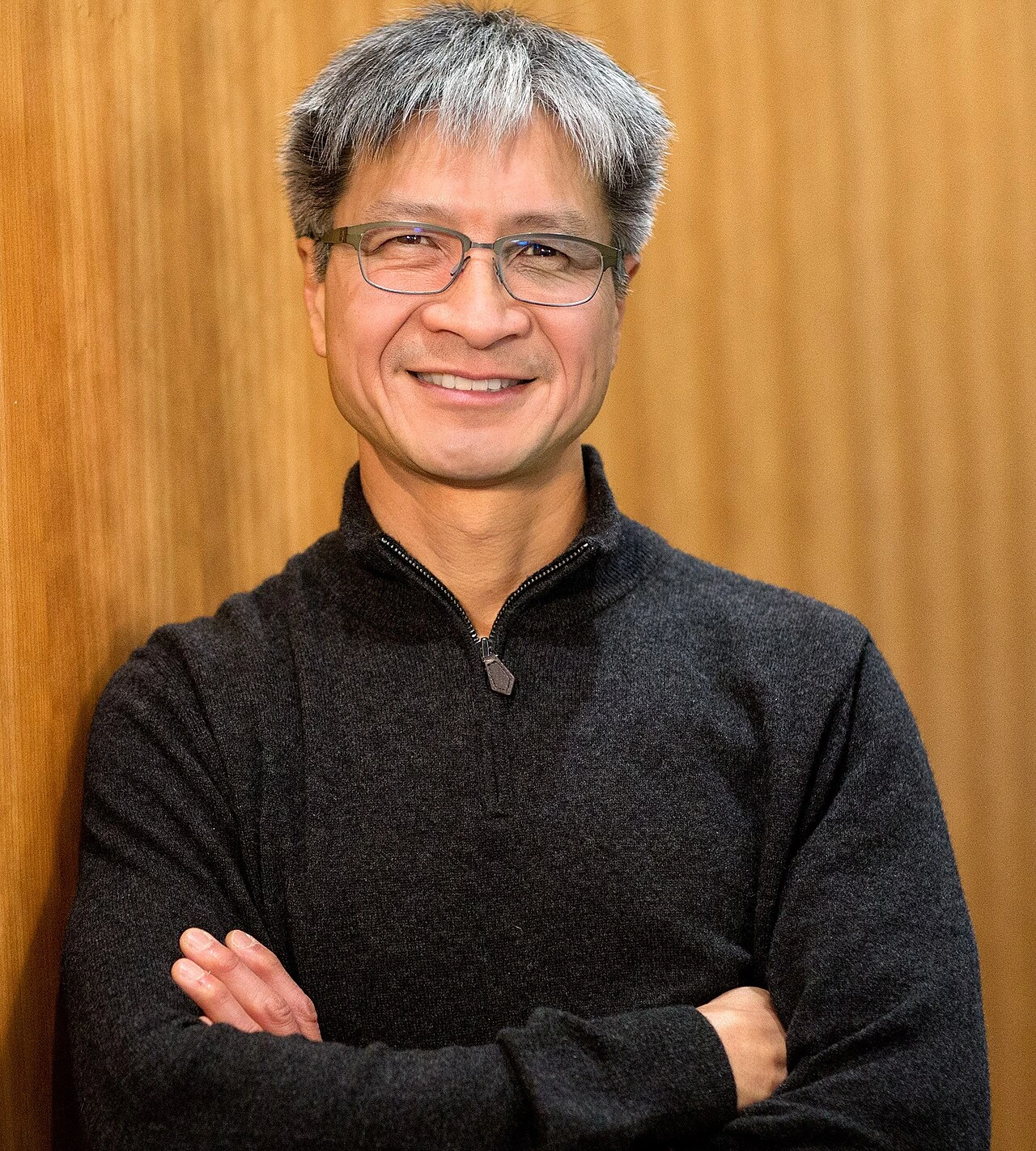
No verified, publicly available estate valuation or probate figure exists for Dr Victor Chang at the time of his death on 4 July 1991. That means no credible net worth number can be responsibly quoted for him. What we can do, and what this profile does, is walk through every documented income stream, known commercial involvement, and posthumous institutional record to explain why no figure has surfaced, what a reasonable estimate would need to account for, and how anyone could attempt to verify a number through official NSW records.
Dr Victor Chang Net Worth: Estimated Estate & Financial Legacy

Marcus Holloway
14 Jul 2026

Net worth snapshot
Dr Victor Chang's personal net worth at death is not documented in any publicly available probate record, national media obituary, or authoritative biographical source including the Australian Dictionary of Biography or Obituaries Australia. No estate valuation figure has been published online or in the sources consulted for this profile. The honest answer is: unknown, and unverifiable without a paid application to the NSW Supreme Court Probate Registry or NSW Land Registry Services. For readers seeking consolidated claims or third‑party estimates, see victor cheng net worth for a focused roundup of circulating figures and source notes. Any specific dollar figure circulating elsewhere should be treated with caution unless it can be traced to a primary document like a probate schedule or certified grant of representation.
For context, a senior consultant cardiothoracic surgeon at a major Sydney teaching hospital in the late 1980s would typically have earned a substantial specialist salary supplemented by private practice fees, and Chang's commercial work through Pacific Biomedical Enterprises added an additional income stream whose value cannot be quantified without corporate or shareholder records. His estate was almost certainly in the upper professional bracket for Australia at that time, but that remains an inference, not a sourced figure.
| Detail | Information |
|---|---|
| Estimated net worth at death | Not publicly documented; no verified figure available |
| Primary income sources | Hospital salary, private surgical fees, commercial device venture |
| Estate records status | Obtainable via NSW Supreme Court Probate Registry (paid application required) |
| Calculation confidence | Low — no primary financial documents in public domain |
Quick facts
| Field | Detail |
|---|---|
| Full legal name | Victor Peter Chang (born Chang Yam Him) |
| Date of birth | 21 November 1936, Shanghai, China |
| Date of death | 4 July 1991, Mosman, Sydney, Australia |
| Profession | Cardiothoracic surgeon, cardiac transplant pioneer |
| Primary employer | St Vincent's Hospital, Sydney (consultant cardiothoracic surgeon) |
| Major honour | Companion of the Order of Australia (AC), 1986 |
| Net worth figure | No verified public figure; estate not publicly documented |
| Posthumous legacy | Dr Victor Chang Cardiac Research Institute (VCCRI), launched 15 February 1994 |
Who was Dr Victor Chang?
Victor Peter Chang was born in Shanghai on 21 November 1936 and emigrated to Australia as a young man, eventually completing his medical training and pursuing specialist surgical education abroad before returning to Sydney. He joined St Vincent's Hospital, where he would spend the most consequential years of his career, and became the driving force behind Australia's first sustained cardiac transplant program. His work combined elite surgical skill with an administrator's instinct for building teams, sourcing technology, and pushing institutional boundaries at a time when heart transplantation was still viewed with deep clinical skepticism in much of the world.
The earnings drivers in Chang's career were threefold. First, his senior consultant position at St Vincent's gave him a base salary and, critically, access to private-patient billing that amplified his income beyond a public hospital salary alone. Second, he maintained a private surgical practice on top of his hospital role, a standard arrangement for senior Australian specialists of that era. Third, and most distinctively, he was involved in the commercial development of cardiac devices through Pacific Biomedical Enterprises, a venture tied to manufacturing heart valves and mechanical assist devices through a Singapore and Guangzhou operation. That third stream is the most financially opaque, and it would have represented either significant upside or, depending on how the venture was structured, a capital commitment rather than a return.
Chang was awarded the Companion of the Order of Australia (AC) in 1986 for his services to medical science and to international relations between Australia and China. Honours of that class carry no direct financial payment, but they do reflect and reinforce a surgeon's professional standing, which in turn supports premium private-practice fees and consulting opportunities. He was murdered in Mosman on 4 July 1991, killed by two Malaysian nationals in an extortion attempt that shocked Australia. He was 54 years old.
Career and life timeline
| Year | Milestone | Earnings / financial relevance |
|---|---|---|
| 1936 | Born in Shanghai as Chang Yam Him | — |
| 1950s–60s | Emigrated to Australia; completed medical degree | Training phase; no significant independent income |
| 1960s–70s | Postgraduate surgical training, including time in the US and UK | Fellowship-level stipends; building specialist credentials |
| 1970s | Joined St Vincent's Hospital, Sydney as cardiothoracic surgeon | First specialist salary; private billing commences |
| 1984 | St Vincent's cardiac transplant unit formally established under Chang's leadership | Increased case volume, higher billing potential, national profile |
| Mid-1980s | Pacific Biomedical Enterprises / St Vincent's Heart Valves commercial venture | Potential royalties, equity, or contract income; not publicly quantified |
| 1986 | Appointed Companion of the Order of Australia (AC) | No direct payment; significant reputational and billing upside |
| Late 1980s | Team performs approximately 197 heart transplants and additional heart-lung procedures | Peak career income period; senior consultant fees at maximum |
| 1991 (4 July) | Murdered in Mosman, Sydney; aged 54 | Estate enters probate; NSW Supreme Court Probate Registry (no public record found) |
| 1994 (15 Feb) | VCCRI formally launched by PM Paul Keating | Posthumous institutional endowment; separate from personal estate |
Where his income came from
Hospital salary at St Vincent's
As a senior consultant cardiothoracic surgeon at St Vincent's Hospital, Chang would have been paid under the specialist medical officer scales applicable to NSW Catholic health facilities in the 1980s. Senior consultant rates for cardiothoracic surgeons in Australia during that decade were among the highest in the medical profession, reflecting both the skill involved and the limited supply of qualified practitioners. No specific salary figure for Chang has been published in biographical or archival sources, but the baseline is well above the national median professional income of the era.
Private surgical practice fees
Australian consultant specialists of Chang's standing routinely operated in both the public and private sectors simultaneously. Private cardiac surgery fees in Australia during the late 1980s were substantial, particularly for complex procedures like heart transplants, coronary bypass surgery, and valve replacement. Chang's leadership of the transplant unit and his national reputation would have positioned him at the top end of the private-billing scale. Again, no documented fee schedule or annual private practice earnings for Chang exist in the public record.
Pacific Biomedical Enterprises and device commercialisation
Biographical and Wikipedia-sourced accounts describe Chang's involvement in Pacific Biomedical Enterprises, a commercial effort to develop, manufacture, and market heart valves and mechanical cardiac assist devices through operations in Singapore and Guangzhou. Contemporaneous accounts refer to his involvement with blank" rel="noopener noreferrer">Pacific Biomedical Enterprises (St Vincent’s Heart Valves), a Singapore–Guangzhou–Sydney venture to develop and manufacture heart valves and mechanical cardiac assist devices. This venture is the most financially significant and least transparent element of his income picture. Depending on whether Chang held equity, received royalties, drew consulting fees, or was simply an adviser to the enterprise, the financial implications range from modest to very large. Without corporate registration records, shareholder agreements, or patent filings in the public domain, it is not possible to assign a value to this involvement.
Research grants and institutional funding
Chang led a high-volume, internationally watched transplant program, which typically attracts competitive research grants from bodies like the National Health and Medical Research Council (NHMRC) in Australia. Research grant income flows to the institution and the research program rather than directly to the investigator as personal income in the Australian system, so while grants would have supported Chang's work and team, they do not translate directly into personal wealth. No specific grant amounts attributable to Chang personally have been identified in public records.
Speaking, consulting, and international engagements
A surgeon of Chang's international profile, particularly one operating at the intersection of Australian medicine and China-focused healthcare development, would have had opportunities for paid speaking engagements, advisory roles, and consultancy arrangements with hospitals, device manufacturers, and government health bodies. These income streams are individually modest compared to surgical fees but cumulatively meaningful. None are documented in available public sources.
Assets and estate at death
The honest position here is that no publicly accessible document confirms what Victor Chang owned at the time of his death in July 1991. The estate would have entered NSW probate through the Supreme Court Probate Registry, and the relevant records, including any grant of probate, certified will, or inventory of assets, are in principle obtainable through a formal application to that Registry or via State Records NSW. Supreme Court (NSW) rules set the procedural basis for obtaining probate records and grants of representation through the Supreme Court Probate Registry Supreme Court / NSW legislative rules on probate filings (procedural basis for obtaining probate records). Those searches require a paid application and are not freely searchable online. A name-based historical property title search through NSW Land Registry Services would similarly require a paid search against his legal name, Victor Peter Chang, or any associated corporate entities.
What is known contextually: Chang lived in Mosman, a high-value harbour-side suburb of Sydney where residential property prices in 1991 were already among the most expensive in Australia. A senior cardiac surgeon of his standing with a 20-plus-year specialist career would typically have accumulated real property, superannuation, and investment assets consistent with upper-professional Australian wealth. But 'typically' is not a sourced figure, and this profile will not invent one. Any researcher or journalist wanting to establish a verified estate value would need to obtain the NSW probate record directly.
- NSW Supreme Court Probate Registry: applications for grants of representation, certified wills, and probate schedules can be submitted online or in person
- State Records NSW: holds archival indexes for historical probate packets and guidance on accessing older estate files
- NSW Land Registry Services: paid name-based or address-based title searches can identify historical property ownership; fees apply per search
- ASIC historical company records: may hold corporate filings linked to Pacific Biomedical Enterprises or related entities that would shed light on Chang's equity position
- Australian Patent Office (IP Australia): historical patent searches under Chang's name or associated entities could reveal royalty-generating intellectual property
The Victor Chang Cardiac Research Institute and financial legacy
The Dr Victor Chang Cardiac Research Institute (VCCRI) was formally launched on 15 February 1994, with Prime Minister Paul Keating presiding over the opening. The institute is a separate legal and financial entity from Chang's personal estate. Its endowment, funding streams, and organisational assets belong to the institution and its donors rather than representing a continuation of Chang's personal wealth. The Victor Chang Foundation, which supports the institute and related cardiac research, has raised substantial funds over the decades since 1994, but those figures reflect philanthropic activity in Chang's name rather than the value of his personal estate.
The existence and scale of the VCCRI do speak to Chang's lasting professional and cultural capital. The institute's fundraising success, which has drawn government, corporate, and public donors across three decades, is a function of the reputation he built during his lifetime. In that sense, his human capital translated into institutional financial capital after his death, even if that conversion cannot be assigned a personal net worth number.
How this estimate was built (and why it stays incomplete)
For most celebrity and professional net worth profiles, the methodology involves combining publicly documented salary benchmarks, known property records, verified business ownership stakes, and any published estate or probate data. For Victor Chang, the publicly available record covers positions, honours, and commercial involvements but stops short of any numeric estate or asset valuation. The Australian Dictionary of Biography, Obituaries Australia, contemporaneous newspaper coverage, Wikipedia's sourced summary, and the VCCRI's own historical materials were all reviewed. None contain a probate figure, estate inventory, or verified personal wealth estimate.
The gap exists partly because Chang died in 1991, before digital public records were standard, and partly because Australian probate records are not freely searchable online in the way that, for example, some US probate court filings are. That is not unusual for Australian public figures of his era. It does mean that any net worth figure published for Chang without a cited primary source should be treated as fabricated rather than estimated. The responsible position is to document what is known, explain what would be needed to fill the gap, and leave the number blank rather than guess.
A note on other 'Victor' profiles
Search traffic for 'Victor Chang' occasionally reflects interest in other prominent figures with similar names. If you meant Victor Hwang, see the separate profile on victor hwang net worth for that individual's financial details. Dr Victor Chang the cardiac surgeon is distinct from Victor Sen Yung, the American actor known for Bonanza; Victor Wong, the Chinese-American character actor; Victor Peng, the semiconductor executive; Victor Cheng, the business consultant and author; Victor Fung, the Hong Kong business magnate; Victor Goh, the Singaporean entrepreneur; Victor Hwang, the innovation economist; and Victor Wang, a name shared by several business figures. Each has a separate financial profile driven by entirely different career structures and geographies. If you landed here looking for one of those individuals, their profiles cover the relevant wealth and career data for their respective fields. If you meant the actor Victor Sen Yung, see the separate profile on Victor Sen Yung net worth for his distinct financial information. If you were seeking information on a different individual (for example, Victor Wang), see the Victor Wang net worth profile for that person's separate financial details. If you were looking for the financial profile of a different individual, see the Victor Goh net worth profile for that person's specific details. If you meant Victor Fung's financial profile, see the Victor Fung net worth profile for his estimated wealth and career background. If you were actually searching for Victor Peng's financial profile, see the Victor Peng net worth page for details on his career and estimated wealth.
The bottom line
Dr Victor Chang was one of Australia's most distinguished medical figures, a cardiac surgeon whose work saved hundreds of lives and whose institutional legacy continues through the VCCRI more than three decades after his death. His financial profile, by contrast, remains undocumented in the public record. The income sources were real and substantial: a senior consultant salary, private surgical fees, and a commercial device venture whose value cannot be pinned down without corporate records. The estate exists in NSW probate archives and can be accessed through proper channels. Until those primary records are obtained and published, any net worth figure attached to his name is an inference at best and an invention at worst. This profile will not put a number on it.
FAQ
What was Dr Victor Chang’s net worth at death?
No verified numeric net‑worth or probate valuation for Dr Victor Chang (died 4 July 1991) is published in major biographical sources, national media obituaries, or the institutional records reviewed. Authoritative biographies and obituaries document his positions, honours and commercial involvements but do not report an estate figure. (Sources: Australian Dictionary of Biography; Obituaries Australia; institutional histories.)
Why is there no reliable net‑worth figure available?
Public sources reviewed (ADB, national obituaries, foundation/institute records, media archives) do not publish a probate value or itemised estate disclosure. In New South Wales, certified probate documents and historical land/title searches are held by the Supreme Court Probate Registry and NSW Land Registry Services and typically require a formal request and fee to obtain; without those primary records, any numeric estimate would be speculative. (Sources: ADB, NSW court/registry guidance.)
What verifiable income sources did Dr Chang have in life that would contribute to net worth?
Documented income drivers include: consultant cardiothoracic surgeon salary and private practice earnings at St Vincent’s Hospital; leadership of the national cardiac transplant unit (clinical fees and hospital appointments); consultancies and advisory roles; participation in commercial biomedical ventures (eg, Pacific Biomedical Enterprises / St Vincent’s Heart Valves) which may have generated corporate equity, consulting fees or royalties; and research grants/fellowships supporting lab work (these fund research rather than personal income). Public sources identify these categories but do not publish amounts or royalty/corporate records. (Sources: ADB; contemporary press accounts; institutional histories; Wikipedia summary references.)
What verifiable assets or estate items are recorded publicly?
Public secondary sources record Chang’s professional legacy (foundations, institutes) but do not publish an itemised list of his personal assets (eg, residential property, bank balances, shareholdings). To verify real property or other titled assets requires paid title searches at NSW Land Registry Services and certified probate/will copies from the Supreme Court Probate Registry; those primary records were not found in free public archives consulted. (Sources: Victor Chang Foundation; NSW LRS and Supreme Court probate procedures.)
Did Dr Chang leave a will or was probate granted, and how can I obtain those records?
Probate applications and wills for NSW deaths are processed by the Supreme Court Probate Registry. To obtain a copy you must apply to the Registry or use a service that can request a certified copy; historical probate indexes may also be held at State Records NSW. Because no online published copy was identified in the consulted secondary sources, obtaining certified primary documents (will, grant of probate, probate schedule) is the recommended method to establish an estate valuation. (Sources: NSW Supreme Court rules; State Records guidance; practical how‑to resources.)
What is known about Chang’s commercial ventures and potential non‑salary income?
Biographical accounts reference Chang’s involvement in developing cardiac devices and heart‑valve manufacturing efforts (eg, Pacific Biomedical Enterprises / St Vincent’s Heart Valves) and team leadership that could have produced patents, royalties or equity. However, corporate filings, patent assignments and ASIC/shareholder records would be required to quantify any financial return; those primary business records were not located in the reviewed public materials. (Sources: contemporary reporting summarized in secondary sources; business/patent record guidance.)},{
Next Article
Victor Peng Net Worth: Which Person and Estimated Range
Clarifies which Victor Peng you mean and estimates net worth range using public, verifiable sources and assumptions.